



![WAEC BIOLOGY Past Questions & Answers 2019 - [01]](https://degemlife.com/media/k2/items/cache/867519228d1d5325856fc61d710ded0e_XL.jpg)










Asaaseaban is a popular online newsportal and going source for technical and digital content for its influential audience around the globe. You can reach us via email or phone.
+(233) 504-040-918
info@asaaseaban.com



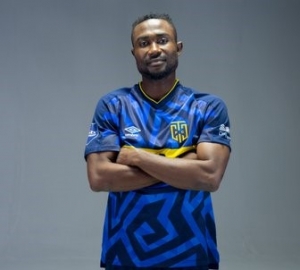
Ghana Premier League side, Medeama have recalled striker Prince Opoku Agyemang who is on loan at South African side Cape Town City.
The Ghanaian striker completed his loan move to the South African side in October 2020.
He left the shores of Ghana after scoring 11 goals in 14 games for Medeama in the truncated 2019, 2020 Ghana Premier League season.
Prince Opoku Agyemang signed an initial 1-year deal with the option to extend to June 2024 with Cape Town City Football Club but the two clubs have agreed to mutually terminate the deal with reasons best known to the two clubs.
His return will be a massive boost for Medeama as the Mauve and Yellows have struggled to replace him since he departed from Ghana.
From Sammy Heywood Okine
Tamale Super Ladies goalkeeper Mutaka Kailatu dies
Tamale Super Ladies goalkeeper Mutaka Kailatu has died.
The young shot-stopper was confirmed dead on Monday, 25th January, 2021 after a short battle with illness.
The sad news was broken by her club on Twitter.
“Management of Tamale Super Ladies are SAD to announce the DEATH of one of the goalkeepers of the club MUTAKA KAILATU (OLELE) which occurred this evening. Burial will take place at Dalung tomorrow. May Allah have mercy,” the club wrote.
Kailatu will be buried on Tuesday according to Islamic customs.
She was one of the budding goalkeepers coming out of the Northern Zone of the female divisions.
From Naa Amerley
By Magnus Rex Danquah
The ever-lingering question of ‘Who Is A Ghanaian’, which over the years has refused to go away, has come back to the fore in recent times, especially following the President, Nana Addo Dankwa Akufo-Addo’s inaugural address at his swearing-in in January 2017.
Even before this, I have been agitated in my spirit for a while about the issue and have been exploring the several ways a person could be pronounced a ‘Ghanaian’ – by the passport he bears, or by birth, or naturalisation, or from parentage, by law according to the Constitution of the Fourth Republic, or additionally we could have a special yardstick by which we could make a determination.
It is even more intriguing that the issue of DUAL - CITIZENSHIP could also cause many to question themselves as to who really is a Ghanaian. The instances in our recent past that Members of Parliament, who have won elections could be expelled from the House on the issue of dual-citizenship and others threatened with jail sentences, make the issue’s determination more critical now than ever before.
I was one of the many or the very few, who felt proud by the admission of Hon. Boakye Agyarko, Minister of Energy that for the 25 years he was in the USA as a political refugee he never sought any other citizenship; but then again I couldn’t have expected anything less of him for good reason.
I personally hold the strong conviction that CITIZENSHIP is not a free lunch, as it goes with rights and responsibilities, on the both the state and the individual; and for as long as one is negligent on the responsibilities then one cannot claim the full benefits of the rights; and believing that the seven litmus tests for citizenship, in my opinion, should be: (i) loyalty, (ii) patriotism, (iii) nationalism, (iv) character, (v) identity, (vi) culture, and (vii) allegiance.
For the purposes of clarity of appreciation of what the seven (7) litmus tests are as expanded, they include: loyalty – is the state or quality of being loyal; faithfulness to commitments or obligations; faithful adherence to a sovereign, government, leader, or cause; patriotism – is show and or commitment to devoted love, support, and defense of one’s country and or national loyalty; nationalism – is the spirit or aspirations common to the whole of a nation, devotion and loyalty to one’s own country; patriotism, the desire for national advancement or political independence, the policy or doctrine of asserting the interests of one’s own nation viewed as separate from the interests of other nations or the common interests of all nations; and character – is the aggregate of features and traits that form the individual nature of some person, moral or ethical quality, qualities of honesty, courage, or the like; integrity, reputation, the account of the qualities or peculiarities of a person; any trait, function, structure, or substance resulting from the effect of one or more genes as modified by the environment.
The others are: identity – the state or fact of remaining the same one or ones, as under varying aspects or conditions, the condition of being oneself and not another, the state or fact of being the same one as described, the condition or character as to who a person is; the qualities, beliefs or faith that distinguish or identify a person; culture – the quality in a person or society that arises from a concern for what is regarded as excellent in arts, letters, manners, scholarly pursuits; that which is excellent in the arts and manners; a particular form or stage of civilization, as that of a certain nation or period; the beliefs and behaviours characteristic of a particular social, ethnic, or age group; the sum total of ways of living built up by a group of human beings and transmitted from one generation to another; and allegiance – the loyalty of a citizen to his or her government or of a subject to his or her sovereign; and the loyalty or devotion to some people, group, cause, or the like.
The rights of the people include the enabling environment the state has to provide for the citizenry; equal opportunities and access for all irrespective; equality before the law; level playing field for all; and no discrimination on basis of tribe, creed, ideology, identifiable political party or sex.
Thus, it is my belief every Ghanaian should be provided with the environment to secure for himself or herself a good education, profession, trade, calling and or vocation, possibly to the tertiary level but definitely for him or her, aspire to reach a level, at least equal to or an improvement on the levels reached by his or her father and or mother or the topmost levels of the generations before him or her.
That, this Ghanaian should never compromise on the acquisition of formal and or informal education at all levels but also not to be mechanical about studies – chew, pour and pass; but desire to be a critical thinker, diligent in questioning all the facts with their circumstances before venturing an opinion or decision.
And better still on education, this Ghanaian should always be more than inquisitive about everything to understand underlying principles, rational, values and to appreciate the whys, the what’s and the how’s; as well as recognising that all subjects have lessons to teach, principles and ethics to impart; and to appreciate for one’s latter life, including even history which is record of events. In fact, even the distorted history to undermine the truth is a lesson of life, especially to appreciate the dynamics of the society and factionalism.
That, this Ghanaian should accept that hardwork and honesty do not kill but are some of the core, one of the critical keys to success by any definition; recognising and appreciating that serving apprenticeship is essential to real success and appreciation of life. To my mind, apprenticeship should be a major consideration for all manner of persons desiring POLITICAL OFFICE, including aspiring ministers of state, members of parliament, MMDCEs, and heads of institutions that require changes every four years.
I am not in the least saying that anybody fresh from the university cannot aspire for any office of state: but let us face it politics of old was for people of matured disposition, and mostly retired or about retiring for good reason.
If you have worked for the number of years in question, your attitude to easily falling prey to corruption, entrapments of office as well as sensitivity to matters of the people, especially the voiceless and defenceless is different; even as you are more guarded in what you might think and say. Definitely, with apprenticeship, you dare not imagine or much more say that if you do not make one million dollars (US$1,000,000.00) or two within one year in office, you should be considered a failure.
Indeed, this Ghanaian should also endeavour to source for a MENTOR of unique character to assist him or her refine his or her every ambition, goal, vision and dream, including desiring a political office.
For me one cardinal quest for this Ghanaian ought to be questioning to appreciate why God gave him or her the particular parents who gave birth to him or her, to appreciate the siblings he or she has, understanding that they are to enhance each other’s strengths, skills and talents for the unique roles, individually they shall play for each other within the immediate and extended families; and even more why he or she came as a member of the descendants of the patriarch of the bigger family.
It is also imperative that this Ghanaian, whatever school he or she attends from the basic, through junior to senior high schools right to the tertiary, he or she will appreciate the values inherent in the traditions and heritage of each institution to have full benefits thereof for holistic mental, physical, spiritual development of the person, especially what drove the institutions’ founding fathers to set up the institution to appreciate what he or she takes from the institution in addition to the academic certificates.
And that, this Ghanaian cannot pretend to be insensitive to the conditions, politics and the ever-changing state of the different types of environments in which he or she finds himself or herself from the hamlet through the village to town and city to the national levels, especially as he or she relates to the people and their socio-political developmental needs.
In the days of old, a child did not belong exclusively to his or her parents but to the community; and why the people in the community could all contribute towards the education of that one child with the greatest ability and academic capacity to develop to his or her fullest potential, knowing he or she will always come back to give back to the community.
Sad that with all our advancement comes the selfishness of individual families that only their children should do well and come back to lord over the other children. Some advancement indeed!
Again, this type of Ghanaian shall not be over-opinionated but humble enough to appreciate that everybody has his or her own cross to carry, even if that cross is mentoring another to be much bigger than himself or herself to achieve a societal goal; recognizing and accepting the creed that serving APPRENTICESHIP in all fields of endeavour not only determines the legacies of the master but also how the apprentice-turned-master later shall endeavour to take unto himself or herself new and more apprentices to sustain the values and heritage of their calling or profession or trade or craft.
This new Ghanaian, no matter the calling should recognize that HUMILITY and TOLERANCE are the two greatest virtues that define a person’s real character; not the quest to be rich overtime, reaping where he or she has not sown and impoverishing in the people he or she has sworn an oath of office to protect and advance their cause rather.
It also means that this Ghanaian should not be full of all-self-righteousness, but be guarded in thought and speech, full of wisdom and slow to anger towards building a better future for all, including other people’s descendants and posterity; and he or she should appreciate that how prosperous he or she is, is really nothing unless it is for greater public good of all.
It is thus important in the context to understand and appreciate who really is a Ghanaian?
My interest isn't in the legal definitions for that’s the cheapest qualification for any person to belong to any state or nation.
I have been intrigued for the last decade or more, especially when I tried my hand at the article: MFANTSIPIM IS A BRAND and then needed to look at the ethos; the brand attributes and then I began to question myself as to whether I am more Ghanaian than a foreigner who has spent his or her entire life in service to Ghana against a native whose only prerequisite is to steal from his or her people and thus contribute towards impoverishing him or her.....?
If I try to define a GHANAIAN AS A BRAND, I should be able to define the parameters of the attributes, the ethos which if one possesses should qualify him or her as a Ghanaian; and not a native in a privileged position of governance who compromises the state Ghana by selling state secrets to a foreigner for personal profits and then cleans his lips as well as pretend he is suffering like the rest of us.
For me, Ghana is at a crossroads of national identity crisis: our leaders pretend to lead us, fighting for our rights and benefits but knowing they are only watching each other's back than us, whilst we also pretend to being lead and following. Mostly, we in fact do not qualify by deed and conduct to be diligent followers conscious of how we are led. The true lead-follower has responsibility as much as do the leader-followed.
Guess, that is why we get paid for exercising our civic rights during national elections for good reason; for we know and they also know that after elections we won't see them again till the next elections - who then really is a Ghanaian?
If you ask me – frankly, I think we are all TENANTS in Ghana, including our chiefs or better still some chiefs. Trust me, some have mortgaged the futures of generations yet-unborn to servant-hood in their own father's houses.
Admittedly, we are all tenants in our father's houses, not caring what goes on now as strangers are now the owners of our inheritances. Otherwise, how on earth could any foreigner or stranger come onto our father's house and land and take control to benefit exclusively; and worse have the people paid to protect us become rather their agents of subjugation over us? Thus, instead reverse the status with us to make us rather the 'strangers' in our own fathers’ houses?
Who really is a Ghanaian...?
IF we define who a Ghanaian is, then we would be better placed appreciate all possibilities, all hopes, all wishes, all imaginations, all visions, all prospects, all potentials, all futures, all promises and all expectations that lie before us as a people; and how these could be realized for any Ghanaian, given equal opportunities for education, training, vocation, apprenticeship, gifting, calling, hardwork, honesty, commitment, devotion, loyalty, dedication, perseverance, and ministry.
Wonder why we take some basic things for granted, such as WHY our Creator made us come to earth as sons and daughters of GHANA and that we are born as Ghanaians – so the issue of who a Ghanaian is isn’t a legal issue. Guess that is why when some of us are appointed into positions of trust and leadership, we are made to SWEAR OATHS OF ALLEGIANCES? Guess that is why in all jurisdictions, people of DUAL-NATIONALITY are trusted less and would not be allowed into certain positions as legislature and or executive arms of government.
NATIONALITY has been defined as membership of a particular nation or state, by origin, birth, naturalization, ownership, and allegiance or otherwise; whilst a National connotes ethnic and or cultural, character or identity.
Thus, being a Ghanaian reflects being one of a people sharing a common origin, culture and or language, and possibly constituting a nation-state.
In the global sense, nationality connotes a political existence, independence or unity as a national entity, requiring a high sense of patriotism.
It is imperative to state that in the context of membership of a nation or state, one would require a sense of affiliation, allegiance, ancestry, citizenship, descent, enfranchisement, ethnicity, national status, naturalization, origin, parentage, race, residence and status.
When one desires to consider a national character or identity, then we would be considering ancestry, colour, ethnicity, identity and origin; whilst for a people, we need to look at clan, confederation, cultural group, culture, denomination, ethnic group, ethnicity, faith, group, nation, people, persuasion, race, sect or tribe.
For a political existence as a national entity, we would need to look at autarchy, autonomy, freedom, independence, liberty, nationhood, self-determination, self-government, self-rule, separation and sovereignty; whilst for the idea of supporting one’s country, people or culture, we would consider patriotism or patriotic sentiment.
Within the myriad of all the definitions stated above, I repost my original question again: WHO IS A GHANAIAN?
What expectations, requirements, attributes, characteristics or ethos should be required of and or fulfilled by any person who styles himself or herself as a Ghanaian?
Once, we are clear in our minds as to the answers to the question and also understand the full import of why our Creator chooses to make us Ghanaians, not as our personal choices, then we will realize that being a Ghanaian is a divine assignment or calling for each person. Our ability to discover our individual divine assignment and or calling as a Ghanaian, would enable us to be better placed and prepared to fulfil our individual as well as collective Ghanaian dreams, quests and aspirations.
Ponder for a moment why you never were born an American, German, British, Ivorian, Liberian or of any other nationality than a Ghanaian: you have a divine assignment and calling for this nation: search for it, pray about it, find it and you will be amazed how much you will enjoy life here on earth.
*The writer is a sportbusiness consultant, land appraiser & economist and events architect & planner
Mohammed Mahadi was last Saturday re-elected unopposed to serve another four years as the President of the Ghana Fencing Association (GFA), at the GFA’s elective congress held at the Kasoa Tuba Junction GFA secretariat
Also elected Mohammed Alhassan as the vice president of the GFA which was also unopposed
Most of the positions were unopposed because they didn’t file their forms when the various position nominees were open
Meanwhile the president of Ghana Olympics Committee, Ben Nunu Mensah led the new executive to sworn in and advised them to bring sanity to the association
Mr Mahadi and he's executive are going to lead Ghana Fencing Association for the next four years and has promised to put all his best for the association
The new executive are.
Mohammed Mahadi- president
Mohamed Alhassan - vice
Alhassan Samani - general secretary
Alhassan Abu Safiyan - deputy general secretary
Abdul Rashid Ali - Treasure
Alhassan Samba - Athletes commissioner
Samuel Nkrumah - executive member
Anyas Fati - executive member
Ibrahim Yakubu - member
Alhassan Mustapha – member
Source – Ghana Fencing
Board member of the Ghana Weightlifting Federation (GWF), Mr. Jerry Ahmed Shaib, has reiterated his commitment to supporting the sport to win more laurels for the nation.
“Weightlifting can pump a lot of medals for Ghana if it elicits the requisite backing as regards equipment and other forms of logistical support, and I promise to do my damnedest to ensure the best for the sport,” he said.
Mr Shaib, who doubles as CEO of the Coastal Development Authority (CODA), made this assertion last Tuesday when he visited the lifters during their training session at the Accra Sports Stadium.
The COA boss has expressed his desire to succeed GWF president, Mr. Ben Nunoo Mensah, and is odds on favourite to grab the post when the federation goes for the polls next month – given his towering allegiance to the sport.
Mr Mensah is not eager to extend his mandate this term, having been at the helm of affairs since 2013. Under his leadership, weightlifting has seen a remarkable transformation, becoming one of the nation’s celebrated sporting disciplines in the last seven years.
“I have a great deal of respect for Ben and hope to continue from where he left off if I’m fortunate to be given the mandate at the polls,” Mr. Shaib, a legal practitioner, stated.
Whilst charging the lifters to demonstrate a high muscle of commitment and dedication to the sport, the GWF board member said he would not accept the situation where “you want to do two sport disciplines at the same time.”
“Our sport needs a lot of focus and chock-full commitment. You cannot serve two sports at the same time. It’s not professional.
“So, let me ask you: what happens if the two disciplines you belong are taking part in a competition concurrently? What would you do,” he queried.
After the meeting that lasted for more than an hour, the CODA boss presented some items that included mini bags of rice, cooking oil, tin tomatoes, corned beef and cash amount of GH¢2,000 to the lifters.
“This is part of your Christmas package and I urge you to train harder ahead of the forthcoming 2023 African Games whilst adhering to all the COVID-19 safety protocols,” he added.
By John Vigah
Former Ghana international Laryea Kingston has rejected claims by a section of Ghanaians that the standard of the Ghana Premier League has fallen.
Laryea, a former winger for Accra Great Olympics and Hearts of Oak in an interview with Kwaku Sarpong Sarkodie of Bryt FM in Koforidua said he is impressed with the standard of play in the ongoing Ghana Premier League.
“Previously, people claimed the standard of the domestic league has dropped but for me, I have watched about three games in the ongoing season and I think there has been an improvement”
“If I say the league has improved, first of all, let me give credit to the FA because of the hype they’ve put in the league. I think the advertisement for our league is amazing, so I will commend them for that.”
“I have watched Dwarfs play and some of the teams trust me I can see a lot of patterns in the game now. Ghanaian players are doing well in terms of their build-up, breakthroughs, and style of play.”
“From the technical point of view, I think coaches have also improved but there is more room for improvement and I believe if we educate our coaches well it will reflect in our game,” he concluded.
Bryt FM
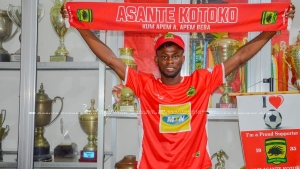
Asante Kotoko have been banned from the second transfer window of the 2020/21 season after the local giants were found guilty of abusive breach of contracts involving four players, the Ghana Football Association (GFA) announced Monday.
The second registration window for the ongoing season is scheduled to open between February 16 and March 18, 2021, but the Porcupine Warriors will not be able to register any new players during the period.
This is due to a ruling by the Players’ Status Committee (PSC) of the GFA on four cases concerning the club and four of its former players – Matthew Kelvin Andoh, Stephen Tetteh Ayiku, Evans Owusu and Abass Mohammed – who, in separate petitions, reported the club for unilateral termination of their contracts.
The players sought for the PSC to rule on the payment of their outstanding salaries and signing-on fees with the GFA body granting them a combined compensation of GH¢197,800 to be paid by Kotoko within 14 days.
Not only that, Kotoko are in further hot waters as the GFA has decided to sanction the club due to the repeated abusive breach of contract in the four cases.
Invoking Article 16(4) of the GFA RSDTP, Kotoko have been banned from registering any new player(s) domestically for one registration period and fined GH¢10,000 for the numerous instances of abusive breach.
In the event Kotoko fails to meet the 14-day deadline for the payment of the GH¢197,800 compensation to the quartet and the GH¢10,000 fine to the GFA, the matter shall be forwarded to the Disciplinary Committee to consider for further sanctions – points deduction.
By Footy-ghana
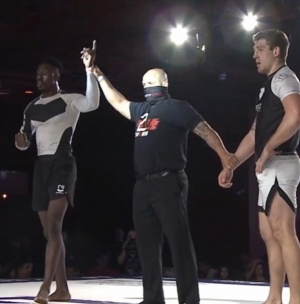
Rida Haisam made a strong statement over the weekend at the just ended Fight 2 with an astonishing victory in the 161 grappling event held in Miami Florida, USA.
Haisam came away with a unanimous decision win over Branden Allen in the No Gi masters Black Belt super heavyweight division.
This is Haisams first win on the competitive North American grappling circuit.
By George Nipah
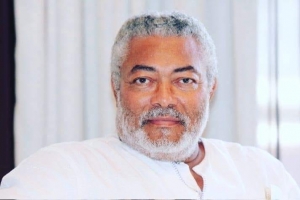
Former Ghana Olympic Committee (GOC) President, Benson Tongo Baba, popularly known as BT Baba says the late President Jerry John Rawlings contributed immensely to the development of sports in the country.
Jerry John Rawlings who passed on November 12, 2020, was the last sitting president in power when Ghana won its last Africa Cup of Nations title in Libya 1982.
B.T Baba who served as the GOC president for over two decades stated in an interview with Ohene-Bampoe Brenya on Happy Sports on Happy 98.9FM said that Jerry Rawlings played a key role in the Black Stars winning its fourth AFCON title in Libya.
“During the 1982 era, sports in Ghana was dead literally but when he came to power with less than four months in the office, he helped the Black Stars at the AFCON in Libya”
“With little or, no preparations he came and gave everyone hope and the team won the AFCON trophy.
He mentioned that Jerry John Rawlings contributed so much for sports in Ghana which is visible today.
“Jerry John Rawlings worked so hard for sports that his work is visible today for all to see. JJ loved Horse riding so even though he wasn’t a sportsman, he helped sports administration because of his military sports background”.
Happy Sports
His first steps in soccer began as president of the club RS Berkane, a city of 100,000 inhabitants, which was then vegetating in the amateur division (3rd Moroccan division). He revolutionized the club through a three-pronged vision: the improvement of infrastructure for the A team and regional mass soccer, the implementation of efficient governance with professional management, and finally the implementation of sustainable financing.
Thus, the RS Berkane will move in a few years from a modest 3rd division club to a major 1st division club which is fighting for the title, which regularly participates in continental competitions (two CAF Cup finals including one won last year against FC Pyramids), and which is now part of the top 10 African clubs according to the latest CAF ranking. RSB also has today one of the best training centres in the country.
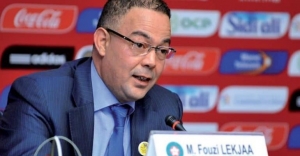
In 2014, Fouzi Lekjaa became President of the Royal Moroccan Football Federation.
During his mandate, he set up an ambitious sports policy based on three pillars.
The first is the development of infrastructures. Fouzi Lekjaa said in an interview with the journalist Alain Foka "we have more than 200 synthetic turf to standards, we have about twenty stadiums with natural grass and lighting to standards, we are at a dozen training centres of clubs that meet all the requirements, we have five regional centres, and we ran all this with the Mohammed VI Football Complex, one of the best centres in the world that meets all standards".
The second pillar concerns the governance of the clubs, which has been greatly improved. Thus, the clubs are to become public limited companies and are placed under the supervision of the National Control and Management Directorate. In return, the FRMF provides each first division club with an annual grant of approximately 600,000 euros. Clubs participating in continental competitions receive financial assistance from the federation for travel and accommodation.
Finally, the FRMF has also focused on training young players who are likely to join professional clubs. It also encourages sports studies at the level of clubs and regional centres. Fouzi Lekjaa told Alain Foka in an interview that, "sport study is a necessity. The girl or boy who plays soccer is given the opportunity to continue his or her studies. Even when he or she is not a good student, he or she is converted to vocational training to learn a trade. The young people are therefore armed with a diploma to be able to integrate another field of activity".
Under the leadership of Fouzi Lekjaa, Moroccan clubs won several continental titles (Champions League 2017 for Wydad, CAF Cup 2018 for Raja, CAF Cup 2020 for Berkane and the 2017 and 2018 editions of the CAF Super Cup). In 2020, the four Moroccan teams involved in the Champions League and the CAF Cup achieved a perfect record, qualifying all for the semi-finals, which is a unique historical performance in Africa.
The results of the national team improved significantly under the mandate of Fouzi Lekjaa: while Morocco had not made it through the first round of the CAN since 2004, it qualified for the ¼ finals in 2017 and passed the second round in 2019. In addition, Morocco managed to qualify for the 2018 World Cup in Russia, 20 years after its last participation.
Morocco also won the CHAN 2018 and the CAN Futsal 2020, both competitions were held at home. The U20 national team managed to qualify for the CAN U20 to be held in Mauritania, which had not happened for 15 years.
It is under the impulse of Fouzi Lekjaa that women's soccer is developing in Morocco. Thus, a National League of Women's Football was set up and shortly afterwards an ambitious "Marshall Plan for Women's Football" was presented. The budget for women's soccer was multiplied by 6 to reach 5.8 million euros. The 2020/2021 season is the first professional edition of the national women's first and second division championship, which is a major step forward for Moroccan women's soccer. Players have guaranteed minimum wages and a mandatory professional contract, while clubs must have a full staff with professional licenses.
The women's national team recruits one of the best coaches, Reynald Pedros, a two-time winner of the UEFA Champions League.
In addition, Morocco becomes in 2019 the first African country to use video assistance (VAR) for its first and second division championship matches.
Fouzi Lekjaa has thus contributed to significantly improve the state of Moroccan soccer, both male and female, both for clubs and national teams. Vice-President of the CAF and candidate for a seat on the FIFA Council in the elections of March 2021, Fouzi Lekjaa also has a clear and dispassionate vision of African soccer, consistent with the strategy he has implemented at the level of Moroccan soccer. Also at Alain Foka, he said, on the subject of infrastructure, that "the great deficit of Africa is linked to the infrastructure deficit. Our continent needs a Marshall Plan to develop soccer infrastructure. We must recognize this priority. We will not be able to develop our competitions with this infrastructure, we will not be able to develop marketing in the future, everything is linked, it is a chain, we must start from the beginning".
"We can make a marshall plan in all countries, starting where the deficit is huge. The experience is there, we can do great things in two years, with financing that we can bring back, and amortize over time, over a maturity of 20-30 years from subsidies. I will continue to advocate for this. FIFA can take money out on the market at zero interest rates, and CAF, by taking care of its image, management and governance, could also do so under almost the same conditions".
He also has an interesting opinion on the importance of having efficient governance within CAF: "CAF as an institution needs to strengthen its managerial capacities, to put in place real management procedures based on the achievement of objectives, transparency and clarity of procedures. This is necessary. If we manage to improve our capacity to invest in infrastructure to keep the added value and export it by negotiating a share of return, and if we manage to reform our management and governance, these reforms together will allow African soccer not only to compete but to make a giant step forward in terms of international positioning because the talent is there, the youth exist and the potential is huge, we will have the right at that time to dream of an African national team in the World Cup final, and we can reduce the gaps with other confederations substantially.
"CAF must modernize, and this concerns all aspects of governance, legal, digitalization, control, audit, good management and transparency, it is fundamental for an institution like CAF. This does not mean that today there is nothing, but CAF has unfortunately suffered too long a stagnation and therefore it is necessary to make a huge qualitative leap. The intelligence is to find the means, the procedures to make this leap without deep fractures".
Fouzi Lekjaa, a promoter of greater south-south cooperation between African countries (the FRMF has signed more than forty partnership agreements with other African federations), says that the success of African soccer can only be collective and advocates the pooling of efforts. "We have allowed, we allow and will allow African national teams to come at the time they wish to spend internships and take advantage of technological developments and performance that exists at the Mohammed VI Complex because in any case the success at the level of our continent can only be collective and the evolution can only be collective.

Asaaseaban is a popular online newsportal and going source for technical and digital content for its influential audience around the globe. You can reach us via email or phone.
+(233) 504-040-918
info@asaaseaban.com